
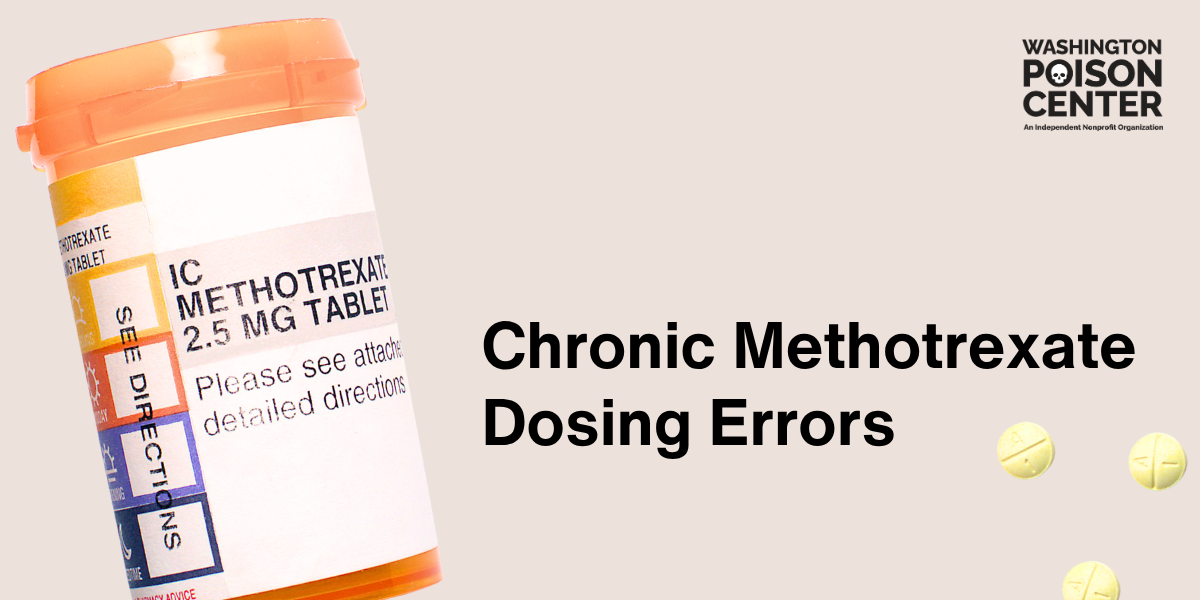
By Danielle Wojcik, PharmD
Methotrexate is a structural analog of folate which competitively inhibits dihydrofolate reductase (DHFR). This inhibition blocks the production of tetrahydrofolate, a compound required for purine and thymidylate synthesis. Without these products, DNA and RNA synthesis and repair are limited. Effects are seen in rapidly dividing cells, and poisoning can affect numerous body systems, including but not limited to, the gastrointestinal tract, the liver, kidneys, central nervous system, and lungs. Acute symptoms of toxicity may include nausea, vomiting, diarrhea, acute kidney injury, or blood dyscrasias from myelosuppression.
The dosing and frequency of methotrexate is highly variable across numerous uses. For oncologic indications such as leukemia or lymphomas, it is typically administered intravenously or intrathecally at high doses. These indications commonly utilize therapeutic drug monitoring to evaluate methotrexate levels and subsequent risk for toxicities. After high dose administration, patients are treated with leucovorin rescue therapy. Leucovorin, an active form of folate, bypasses the DFTR blockade from methotrexate, therefore supporting purine and thymidylate synthesis despite the presence of methotrexate.
In contrast, methotrexate can be used for non-oncologic, autoimmune indications, such as rheumatoid arthritis or Crohn’s disease. When used as a routine maintenance medication for non-oncologic indications, methotrexate is dosed at lower doses and on a weekly interval. For these indications, methotrexate can be administered parenterally, such as a subcutaneous or intramuscular injection, but is most commonly taken orally. These indications utilize therapeutic drug monitoring less frequently than oncologic indications, and do not generally require leucovorin rescue therapy after administration but commonly prescribe folic acid supplementation.
In non-oncologic indications, the lower doses do not mean a lower risk of toxicity. These doses can still produce adverse effects, especially from dosing errors. In chronic methotrexate poisoning, there can be more serious dermatologic, hematologic, and hepatic complications. Ahmadzadeh et al. describe 27 patients with either acute or chronic methotrexate toxicity. They found that despite similar median total doses of methotrexate, the chronic toxicity patients experienced more serious adverse effects compared to the acute toxicity patients. Adverse effects of significance included mucosal ulcers and skin lesions, leukopenia, thrombocytopenia, and anemia.
Methotrexate toxicity occurs when there is inadequate cellular recovery time after administration of a dose or inadequate medication clearance. In non-oncologic indications, dosing errors such as taking more than the prescribed dose, or taking the prescribed dose more frequently than intended, can significantly increase methotrexate exposure. Methotrexate is often prescribed weekly, but when taken daily for multiple days in a row, can cause significant issues.
Treatment of methotrexate toxicity from chronic dosing focuses on leucovorin which bypasses DFTR blockade. Additionally, patients will need treatment for mucositis and supportive care for pancytopenia (e.g., blood products, antibiotics, and granulocyte-colony stimulating factor).
For treatment recommendations for methotrexate toxicity or any other poisoning, call your local poison center at 1-800-222-1222.
References:
Ahmadzadeh A, Zamani N, Hassanian-Moghaddam H, Hadeiy SK, Parhizgar P. Acute versus chronic methotrexate poisoning; a cross-sectional study. BMC Pharmacol Toxicol. 2019;20(1):39. Published 2019 Jul 3. doi:10.1186/s40360-019-0316-8
Asaduzzaman M, Karim R, Saha P, et al. Accidental methotrexate overdose leading to multisystem toxicity: A case report. Toxicol Reports. 2024. Puplished 2024 Dec. https://doi.org/10.1016/j.toxrep.2024.101821
Mruthyunjaya P, Maikap D, Bhuyan B, et al. Clinical Profile of Acute Methotrexate Toxicity in Rheumatic Diseases: A Series of 15 Cases. Indian Journal of Rheumatology. 2024;19(2):117-122. doi:10.1177/09733698241229913
Kallur, Nikitha & Akhiljith, & Antony, Nimna & Neeralagi, Manjunath. (2023). Methotrexate-induced multi-organ chronic toxicity in a rheumatoid arthritis patient: a case report. International Journal of Basic & Clinical Pharmacology. 13. 10.18203/2319-2003.ijbcp20233745