
By Jimmy Leonard, PharmD, DABAT
Glucagon-like peptide receptor-1 agonists (whew, what a mouthful–GLP1s) use has skyrocketed in recent years. Their popularity and revenues are so high that the country of Denmark reports GDP values with and without Novo Nordisk in the report. They are incredibly popular because the most recent agents result in weight reduction of 20% in a large proportion of the treated populations. Reports to poison centers throughout the US have increased along with the demand. There were ~2,500 in 2022, 4,700 in 2023, 8,500 in 2024 and 10,745 through September 2025.
GLP1s agonize receptors in the body that enhance the effect of insulin and inhibit secretion of glucagon. At therapeutic doses, they enhance satiety, decrease appetite, and increase energy consumption. These effects are partially achieved through decreased gastric motility, slowing food transit time. The clinical effects reported in therapeutic studies include abdominal pain, nausea, vomiting, food intolerance, and others. The recommended dosing includes a slow titration to reduce the incidence and severity of these adverse effects. This titration is sometimes misunderstood.
A large proportion of the cases reported to poison centers are related to inadvertent overdose and skipping titration. Many patients have accidentally taken 10-fold overdoses. Some may dose themselves more frequently than recommended (e.g., once a day for multiple days in a row instead of once a week). Ten-fold overdoses usually result in severe nausea, vomiting, and food intolerance. In some cases, patients need prescription anti-emetics and intravenous fluids to maintain hydration. At this point, it is unknown if there are long-term effects from these one-time overdoses.
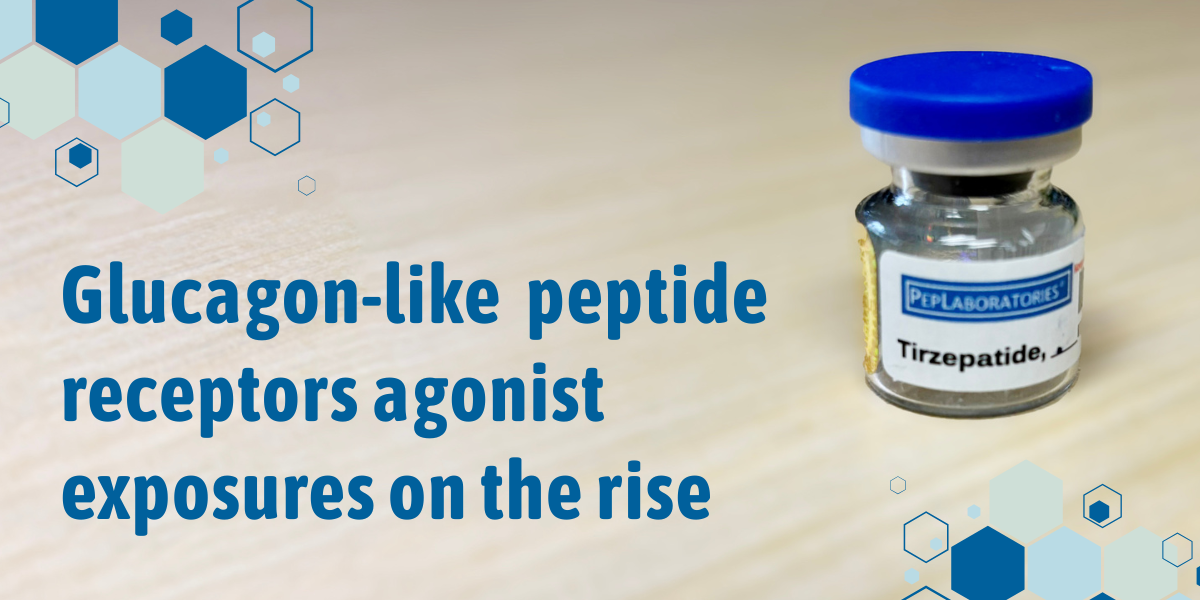
About half of the calls to our poison center are related to compounded semaglutide and tirzepatide. These are dispensed as vials (instead of pens), and patients are often confused about the dosing for multiple reasons (e.g., in units like insulin instead of milliliters). Recently, we have had calls about retatrutide. Retatrutide is an investigational, triple agonist (GLP, GIP [gastric inhibitory polypeptide], and GCGR [glucagon]) being evaluated for obesity and type-2 diabetes mellitus. It is not yet FDA approved, but available online as a “research chemical” that is “not for human consumption.” A small number of exposures have been reported to poison centers over the last year. In our cases, callers have reported similar symptoms to inadvertent overdose of semaglutide or tirzepatide, namely vomiting and inability to tolerate food or liquids for 1-3 days.
Management of GLP1 overdose is supportive: treating nausea, vomiting, and dehydration. Hypoglycemia was reported in 3.4% of all GLP1 exposures reported to one poison center, and patients should be counseled on signs and symptoms of hypoglycemia if being monitored at home.
Call your regional poison center at 1-800-222-1222 for any questions about managing a GLP1 overdose.
To receive Washington Poison Center news in your inbox, sign up here. (If you are a healthcare professional and would like to receive articles like this one and other continuing education resources, check the “healthcare” box on the sign up form.)