


Coping with wildfire smoke
We’re hiring! Click here.
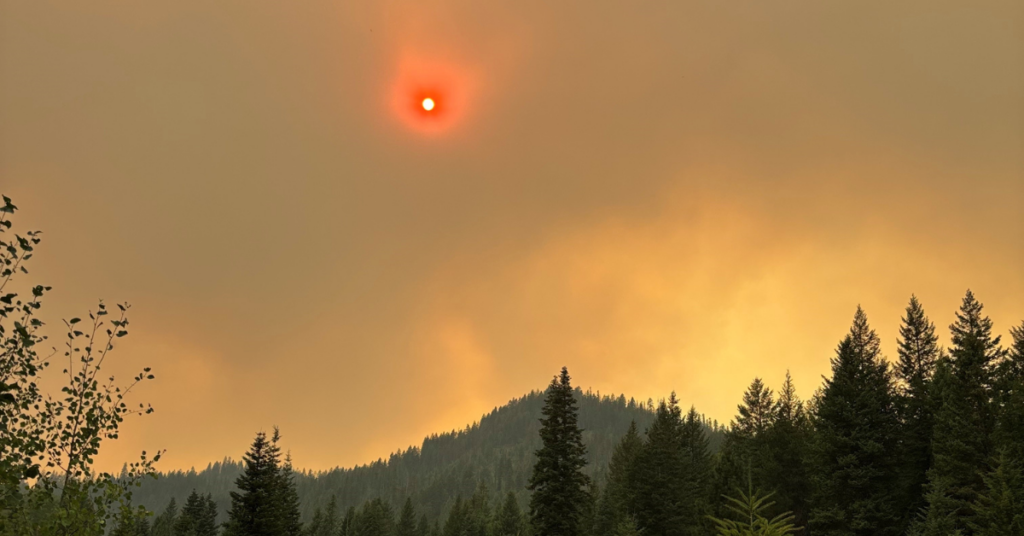
Our hearts go out to our families, friends, colleagues, and communities navigating the wildfires in Eastern Washington. As the air quality index (AQI) reaches Unhealthy and Very Unhealthy levels across the state, protecting your health is critical. We are here to support you with practical guidance to keep you and your loved ones safe during this difficult time.
Wildfire smoke contains small particles and harmful chemicals that can cause minor to serious health effects.
Minor symptoms: eye irritation, sore throat, runny nose, headaches, wheezing, coughing, and shortness of breath.
Serious effects: triggering asthma attacks and worsening other lung conditions.
While smoke is unhealthy for everyone, some people are at higher risk of negative health effects: infants, children, pregnant people, older adults, and people with heart or lung disease, diabetes, or respiratory illnesses.
Call us (1-800-222-1222) with any questions or concerns with wildfire smoke and your health. If English is not your preferred language, we provide free interpretation in over 200 languages.
Check daily air quality and wildfire activity with the Washington State Smoke blog (available in Spanish).
The Air Quality Index reports how clean or polluted the air is, and what that means for your health. The lower the number, the cleaner the air. High numbers mean more pollution and more health risks.
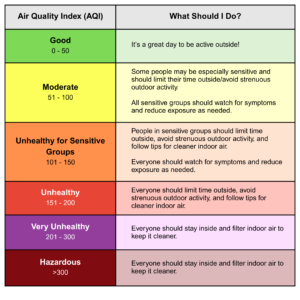
Adapted from the Washington Air Quality Guide for Particle Pollution, also available in Spanish, Arabic, Chinese Simplified, Chinese Traditional, Korean, Punjabi, Russian, Somali, Tagalog, Ukranian, Vietnamese
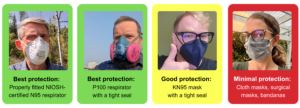
Learn more about using masks for wildfire smoke (also available in: Spanish).
Explore additional strategies to protect yourself and your loved ones with the Washington State Department of Health’s resources.
Join our Chief Medical Officer Dr. Colleen Cowdery as she discusses smoke inhalation, health impacts from wildfires, and coping with wildfire smoke in a presentation on 8/4/2026.
Learn at home protection strategies for coping with wildfire smoke like using masks and cleaning your indoor air.
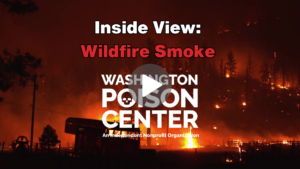
Learn how wildfire smoke affects our bodies and our health.